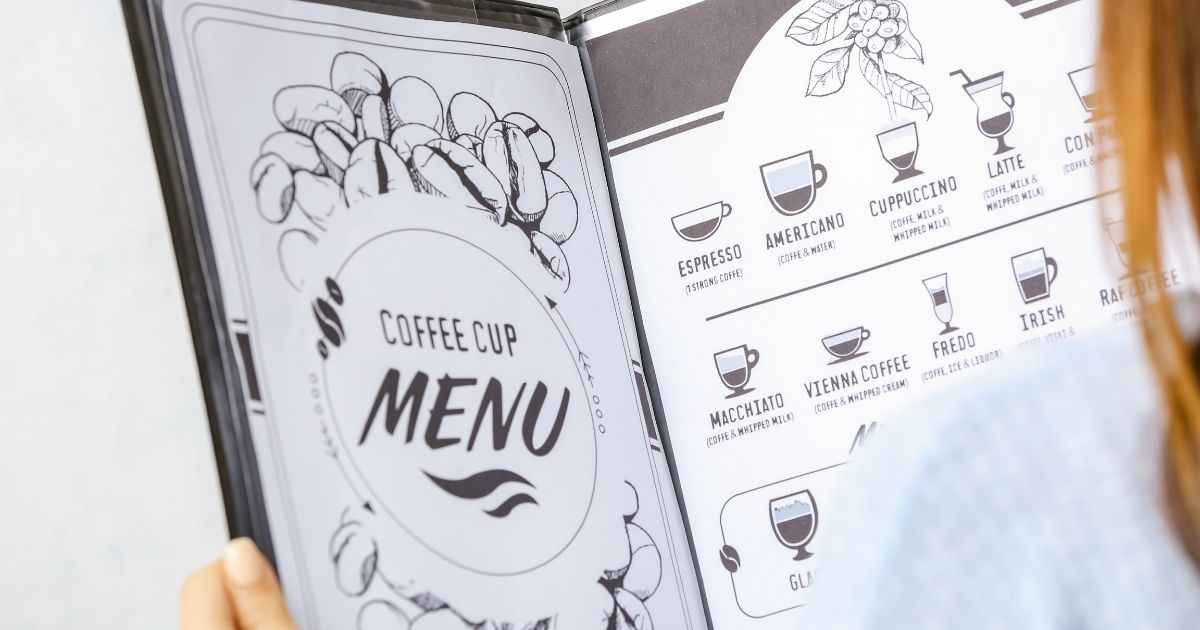
There's a word for the anxiety people feel when ordering coffee: baristaphobia. It sounds made up, but it's a real cultural trend — especially among Gen Z. The unfamiliar sizing, the Italian terminology, the pressure of a line forming behind you while you squint at a menu with forty drinks you've never heard of.
This guide strips all of that away. We'll explain what every major coffee drink actually is, teach you a simple ordering formula that works at any café, and recommend specific starter drinks for different taste preferences. By the end, you'll be able to walk into Starbucks, Dunkin', Dutch Bros, or your local shop and order confidently.
Every Coffee Drink Explained (In Plain English)
Every coffee shop menu is built from the same handful of base drinks. Once you understand these seven, you understand 90% of any menu in the world. Everything else is a variation — different milk, different syrup, different temperature.
| Drink | What It Actually Is | Tastes Like | Coffee Strength |
|---|---|---|---|
| Latte | Espresso + lots of steamed milk + thin foam | Creamy, mild, smooth | Gentle |
| Cappuccino | Espresso + steamed milk + thick foam (equal parts) | Stronger, airy, lighter body | Medium |
| Americano | Espresso + hot water | Like drip coffee but cleaner | Strong |
| Flat White | Double espresso + steamed milk, almost no foam | Velvety, concentrated | Strong |
| Mocha | Espresso + chocolate sauce + steamed milk + whipped cream | Hot chocolate meets coffee | Gentle (hidden by chocolate) |
| Macchiato | Espresso "marked" with a dot of milk foam | Intense, bold | Very strong |
| Cortado | Espresso + equal part steamed milk (small, ~4 oz) | Balanced, concentrated | Medium-strong |
The key variable is the ratio of milk to espresso. More milk = milder coffee flavor. A latte is roughly 75% milk, which is why it's the most beginner-friendly. A macchiato is almost pure espresso, which is why it's not.
Cold Drinks: A Separate World
Cold coffee is its own category, and it's where most beginners end up. If you've seen someone on TikTok with a photogenic iced drink, it was probably one of these:
Iced coffee is regular hot coffee brewed at double strength, then poured over ice. It's bright, slightly acidic, and gets watery as the ice melts. At Starbucks, iced coffee comes sweetened by default — ask for "unsweetened" if you want control over the sugar.
Cold brew is coffee steeped in cold water for 12–24 hours, then strained. No heat is ever involved. The result is dramatically smoother, naturally sweeter, and about 67% less acidic than iced coffee. It also has more caffeine (205mg vs. 165mg in a Starbucks Grande). If you've tried hot coffee and found it bitter, cold brew might genuinely change your mind. Check out our deep dive on iced coffee vs. cold brew vs. nitro for the full comparison.
Nitro cold brew is cold brew infused with nitrogen gas and poured from a tap, like a draft beer. It creates a thick, creamy, almost velvety texture — no milk needed. It's the smoothest, least bitter cold coffee available and it has zero calories. The catch: it's only served in Tall and Grande sizes, and you should never add ice (it disrupts the nitrogen cascade that creates the creamy texture).
The 5 Best Starter Drinks (Ranked by Approachability)
If you want a specific recommendation and don't want to read a menu, start here. These are ordered from "barely tastes like coffee" to "this is real coffee and I'm ready for it."
How to Actually Order: The Universal Formula
Every café — Starbucks, Dunkin', Dutch Bros, your local shop — processes orders the same way. Use this sequence and you'll never freeze at the counter:
Hot or Iced → Size → Modifications → Drink Name
That's the whole formula. Here's how it sounds in practice:
- "Can I get an iced, grande, oat milk, vanilla latte?"
- "Can I get a hot, medium, caramel macchiato?"
- "Could I have a large iced cold brew with cream?"
You don't need to get the order perfect. Baristas are trained to parse incomplete orders. If you just say "vanilla latte, iced," they'll ask you what size. If you say "medium coffee," they know what you mean. The formula just helps you feel prepared.
Starbucks Sizes, Demystified
Yes, you can say small, medium, and large. Baristas won't correct you. But if you want to speak the language:
| Starbucks Name | Normal Name | Hot | Cold |
|---|---|---|---|
| Short | Extra small | 8 oz | — |
| Tall | Small | 12 oz | 12 oz |
| Grande | Medium | 16 oz | 16 oz |
| Venti | Large | 20 oz | 24 oz |
| Trenta | Extra large | — | 30 oz |
Notice that a cold Venti is 24 oz — four ounces larger than a hot Venti — because the ice takes up space. The Short (8 oz) isn't on the menu board but can be ordered for any hot drink. It's perfect for trying something new without a big commitment or a big bill.
At Dunkin', sizes are Small (16 oz), Medium (24 oz), and Large (32 oz) — all notably larger than Starbucks. A Dunkin' Small iced coffee is the same volume as a Starbucks Grande. At Dutch Bros, it's Small (16 oz), Medium (24 oz), Large (32 oz) as well. At most local shops, just say small, medium, or large and you're fine.
Common Beginner Mistakes (And How to Avoid Them)
Not specifying hot or iced. At most chains, the default is hot. If you want iced, say so first — it changes the cup, the preparation, and sometimes the price.
Thinking a Frappuccino is "iced coffee." A Frappuccino is a blended drink — think smoothie consistency. Iced coffee is just coffee poured over ice. If you want something cold and liquid, say "iced." If you want something thick and blended, say "Frappuccino" (Starbucks) or "frozen" (Dunkin') or "blended" (most other shops).
Ordering an Americano expecting something mild. An Americano is espresso diluted with hot water. It tastes like strong, clean black coffee — no milk, no sugar, no softening. It's a great drink, but it's not where you start if you've never had coffee before.
Forgetting that espresso drinks and brewed coffee are different animals. A Tall Latte has about 75mg of caffeine (one espresso shot). A Tall Brewed Coffee has about 235mg. If your goal is energy, brewed coffee or cold brew delivers far more caffeine per dollar than any latte. If your goal is flavor and experience, lattes win. For a full caffeine breakdown, see our Starbucks caffeine guide.
Being afraid to ask for recommendations. Baristas at Starbucks, Dunkin', and Dutch Bros are genuinely happy to help. "I'm new to coffee — what do you recommend?" is a question they hear daily. At Dutch Bros especially, the "broistas" are trained to walk you through options based on your flavor preferences. Just be honest about what you like (sweet, creamy, fruity, chocolatey) and what you don't (bitter, strong, black).
Beyond the Basics: What to Explore Next
Once you've found a few drinks you enjoy, the world opens up. Here's where to go from the starter drinks:
If you liked the mocha, try a White Chocolate Mocha (sweeter, creamier) or a Peppermint Mocha (seasonal, chocolate-mint). You're exploring the "coffee as dessert" lane, and there's a lot of room here.
If you liked the vanilla latte, try swapping the syrup. Brown sugar gives it a warm, almost baked-goods quality. Cinnamon dolce adds spice. Hazelnut leans nutty. Same base drink, completely different flavor profile each time.
If you liked the cold brew, you're on the path to appreciating coffee itself. Next step: try it black. Then try Nitro Cold Brew — it's naturally creamy without any milk. After that, explore pour-over at a local specialty shop. You'll start tasting fruit notes, chocolate undertones, and floral hints that were always there but hidden by milk and sugar.
If you liked the shaken espresso, try a Flat White (stronger, velvety) or a Cortado (small, balanced, now permanent at Starbucks as of 2025). These are coffee-forward drinks with enough milk to keep them smooth. You're graduating from beginner to intermediate.
Don't like any of it? That's fine too. There's a whole world of non-coffee drinks at every major chain — matcha, chai, refreshers, teas — and none of them require you to enjoy the taste of espresso.
Let an App Do the Thinking
The hardest part of ordering coffee as a beginner isn't the menu — it's the sheer number of decisions. Hot or iced? What milk? Which syrup? How much caffeine? When should you stop for the day?
Sipory was built to answer all of that in about 60 seconds. You take a short taste quiz, set your caffeine preferences, and the app recommends specific drinks with barista-ready order scripts — the exact words to say at the counter. It works for Starbucks, Dunkin', and local cafés. It even tells you when to switch to decaf based on your bedtime. For a more detailed walkthrough of what to order at the biggest coffee chain, see our complete Starbucks ordering guide.
Frequently Asked Questions
What is the best coffee for someone who doesn't like bitter taste?
Start with a Vanilla Latte or a Mocha — both use milk and sweetener to soften the bitterness of espresso. Ask for Blonde Espresso, which is lighter and smoother than the standard roast. Cold brew is also naturally less bitter than hot coffee because it's brewed without heat, reducing acidity by about 67%.
What is the difference between a latte and a cappuccino?
Both are espresso plus steamed milk, but the ratio is different. A latte is mostly steamed milk with a thin layer of foam — creamy and mild. A cappuccino has equal parts espresso, steamed milk, and thick foam — stronger coffee flavor and a lighter, airier texture. If you're new to coffee, start with the latte.
Can I just say small, medium, and large at Starbucks?
Yes. Baristas hear this all day and will translate for you. If you want to use Starbucks sizing: Tall is small (12 oz), Grande is medium (16 oz), and Venti is large (20 oz hot / 24 oz cold). There's also a Short (8 oz) that isn't on the menu board — great for trying something new without committing to a full cup.
How do I order coffee at Starbucks without sounding stupid?
Use this formula: Hot or Iced, then Size, then any Modifications, then the Drink Name. Example: "Can I get an iced, grande, oat milk, vanilla latte?" That covers everything. You don't need to memorize Italian. If you forget a detail, the barista will ask — they do this hundreds of times a day.