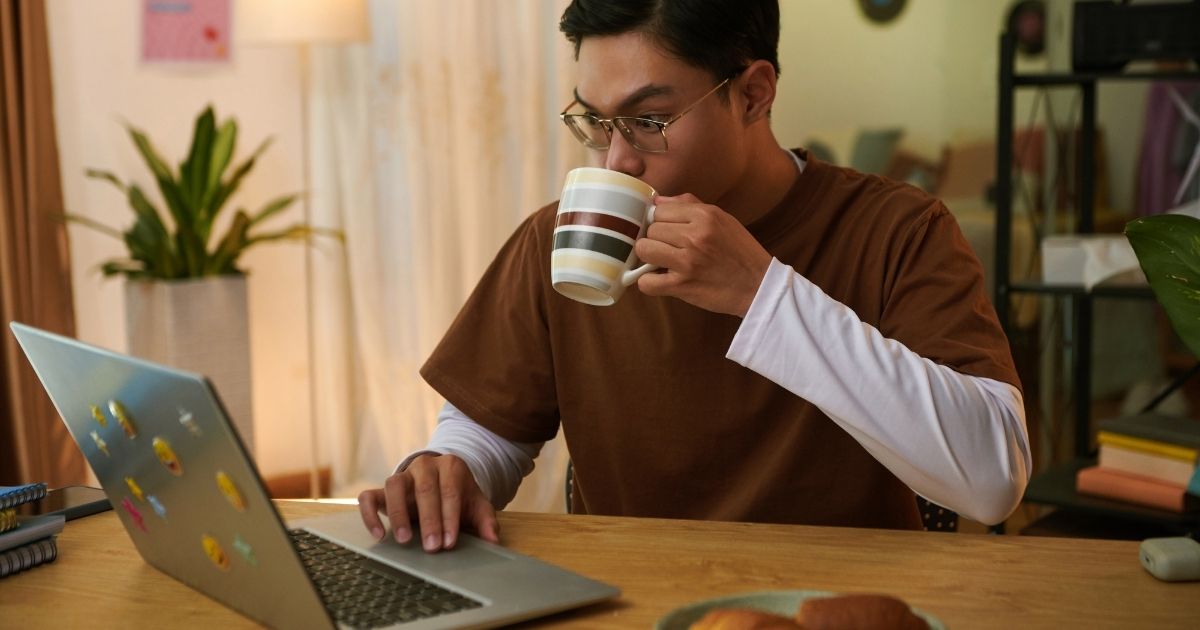
The average college student who buys coffee daily spends $1,100–$2,200 per year at chain cafés. That's a semester's worth of textbooks, half a spring break trip, or 12 months of a streaming bundle you'd use more. The money isn't the problem — the problem is spending it inefficiently. You're buying $6 Frappuccinos with 90mg of caffeine when a $2.95 brewed coffee has 310mg.
This guide is about making coffee work for you in college: getting the most caffeine for the least money, timing it around your classes and study sessions, not destroying your sleep during exam weeks, and knowing exactly what to order at every chain near campus.
The True Cost of a Daily Coffee Habit
Let's do the math most people avoid. Assume you buy coffee roughly 365 times a year:
Grande Iced Latte
Medium Iced Coffee
(~$0.50/cup)
The gap between a daily latte and a daily home brew is $1,734 per year. Over four years of college, that's $6,936. We're not suggesting you never buy a Starbucks — but understanding the math lets you make intentional choices about when the café experience is worth it and when a home brew gets the job done.
The Best Budget Drinks at Every Chain
When you do buy at a chain, these are the orders that maximize taste and caffeine per dollar:
| Chain | Best Budget Order | Price | Caffeine | mg/$ |
|---|---|---|---|---|
| Starbucks | Grande Blonde Roast | $2.95 | 360mg | 122 |
| Starbucks | Grande Caffè Misto + oat milk | $3.65 | 155mg | 42 |
| Starbucks | Grande Shaken Espresso | $4.45 | 255mg | 57 |
| Dunkin' | Medium Iced Coffee + cream | $3.29 | 297mg | 90 |
| Dunkin' | Large Hot Coffee | $2.99 | 300mg | 100 |
| Dunkin' | $6 Meal Deal (app only) | $6.00 | 210mg | 35 (+food) |
| Dutch Bros | Small Cold Brew | $3.00 | ~150mg | 50 |
| Dutch Bros | Small Dutch Soda | $1.75 | 0mg | — |
The takeaway: Dunkin' wins on pure value for caffeinated drinks. A Large Dunkin' Hot Coffee gives you 300mg of caffeine for $2.99 — that's 100mg per dollar, the best ratio at any chain. Starbucks' Blonde Roast is close at 122mg per dollar and arguably tastes better. Dutch Bros' $1.75 Dutch Soda is the cheapest non-caffeine option anywhere.
For the full Starbucks budget playbook, see our cheapest Starbucks guide. For Dunkin' details, our Dunkin' guide. For Dutch Bros, our Dutch Bros guide.
The Three Coffee Strategies for College
Strategy 1: The Home Brewer (Most Affordable)
The cheapest way to get caffeine in college. Total setup cost: $15–$50. Ongoing cost: ~$0.25–$0.75 per cup.
Minimum viable setup: A basic drip coffee maker ($15–$25 at Target/Walmart) and a bag of pre-ground coffee ($8–$12 for ~40 cups). That's about $0.20–$0.30 per cup.
The upgrade that's worth it: A basic cold brew pitcher ($12–$20) pays for itself in a week. Combine 1 cup of coarse-ground coffee with 4 cups of cold water, refrigerate overnight, strain through a fine-mesh sieve. This makes a concentrate that lasts up to 2 weeks in the fridge — dilute 1:1 with water or milk before drinking. You get café-quality cold brew for about $0.30 per cup, compared to $4.25 at Starbucks.
The dorm hack: If your dorm doesn't allow coffee makers with hot plates, an electric kettle ($15) plus instant coffee or pour-over sachets ($0.30–$0.75 each) works. Starbucks VIA instant packets are $1.00 each but taste genuinely decent for instant.
Strategy 2: The Strategic Café User (Best Balance)
Buy at chains 2–3 times per week for the experience and social aspect. Brew at home the other days. This cuts your annual spend from $1,900 to about $500–$700 while still giving you the café ritual when you want it.
Rules for strategic café visits: use the chain's loyalty app every time, order the budget drinks in this guide instead of defaulting to a latte, take advantage of the free refill policy when studying in-store, and save the fancy seasonal drinks for "treat days" rather than making them daily purchases.
Strategy 3: The Loyalty Maximizer (Most Free Stuff)
If you're going to buy daily anyway, stack every loyalty benefit available:
| Chain | Earn Rate | Free Drink At | Best Perk |
|---|---|---|---|
| Starbucks | 2 Stars/$1 | 200 Stars (~$100 spent) | Free Mod Monday, birthday drink, refills |
| Dunkin' | 10 pts/$1 | 500 pts (~$50 spent) | Free welcome drink, $6 Meal Deal |
| Dutch Bros | 3 pts/$1 | 250 pts (~$83 spent) | Free welcome drink (any size) |
Dunkin' has the fastest free-drink cadence — you earn one every $50 of spending. Dutch Bros has the best welcome offer — a free drink of any size, any drink, immediately. Starbucks has the richest ecosystem (refills, birthday drink, Gold tier perks, Double Star days). Sign up for all three apps and use the welcome offers.
Caffeine Strategy for Classes and Studying
Most college students use caffeine reactively — you feel tired, you drink coffee. A proactive approach works dramatically better:
The Class Day Schedule
Skip the 8 AM coffee. Your cortisol is at its daily peak between 8–9 AM. Caffeine during this window is less effective and builds tolerance faster. Wait until 9:30–10 AM, when cortisol dips, and caffeine has maximum impact.
One coffee before your hardest class. Drink 100–200mg of caffeine 30–45 minutes before the class where you need peak focus. A Grande Cold Brew (205mg) consumed at 9:30 hits peak alertness around 10:15 — perfectly timed for a 10 AM lecture.
Afternoon bridge: matcha or chai, not more coffee. At 1:30–2 PM, switch to a lower-caffeine option. A matcha latte (80mg with L-theanine for calm focus) or a chai (95mg) gives you enough lift for afternoon classes without pushing your daily total over 400mg or wrecking your nighttime sleep. Read more on why matcha works differently from coffee.
Hard cutoff 6 hours before bed. If you sleep at midnight: no caffeine after 6 PM. If you sleep at 11 PM: stop at 5 PM. This is non-negotiable during exam weeks, when cumulative sleep debt destroys the memory consolidation you're studying for. See our caffeine-and-sleep guide for the full science.
The Exam Week Strategy
Maintain your normal caffeine intake. Exam week is not the time to triple your dose. Your body is adapted to its current level — dramatically increasing causes anxiety, jitters, and GI distress. You can push to 300mg on specific study days, but don't leap to 500mg.
Sleep beats caffeine. Every time. One hour of sleep does more for memory consolidation and exam performance than one hour of caffeinated studying. If the choice is "study until 4 AM" or "stop at 2 AM and get 5 hours of sleep," the sleep option produces better exam scores in virtually every study. For the full all-nighter protocol, see our study drinks guide.
The Best Drinks for Specific College Situations
Understanding "Baristaphobia"
It's a real cultural trend, especially among Gen Z: anxiety about ordering at coffee shops. The unfamiliar sizing, the Italian terminology, the pressure of a line behind you. If the counter ordering process stresses you out, mobile ordering is your friend. Both Starbucks and Dunkin' have apps where you can build your entire order, pay, and just pick it up — zero human interaction required.
Dutch Bros doesn't have mobile ordering, but the drive-through format means you're in your car, which many people find less intimidating than walking up to a counter. And the "broista" culture there is specifically designed to be welcoming — they'll walk you through options if you say "I'm new, what do you recommend?"
For a deeper dive into the ordering process, including the universal formula baristas prefer, check out our beginner's guide to ordering coffee.
The Dorm Room Coffee Setup (Under $50)
| Tier | Equipment | Cost | Per-Cup Cost | Best For |
|---|---|---|---|---|
| Bare minimum | Electric kettle + instant coffee | ~$18 | $0.15–$0.30 | Caffeine delivery, no frills |
| The upgrade | Cold brew pitcher + ground coffee | ~$25 | $0.25–$0.35 | Smooth cold brew for pennies |
| The enthusiast | AeroPress + kettle + grinder | ~$50 | $0.30–$0.50 | Café-quality hot coffee |
The cold brew pitcher is the highest-ROI investment on this list. It requires zero electricity (important for dorm restrictions), makes enough concentrate for 8–10 cups, stores in a mini-fridge for two weeks, and produces coffee that genuinely tastes as good as what chains sell. A single batch costs about $2.50 in coffee grounds and replaces $35–$40 worth of chain cold brew. For the full comparison, see our cold coffee guide.
Common College Coffee Mistakes
Drinking coffee on an empty stomach. Caffeine on an empty stomach increases acid production and can cause nausea, jitters, and anxiety. Eat something first, even if it's just a granola bar.
Using caffeine to replace sleep instead of supplement it. Caffeine blocks the sleepiness signal (adenosine) but doesn't eliminate the cognitive deficits of sleep deprivation. After 24 hours without sleep, no amount of coffee restores working memory or complex reasoning to baseline.
Defaulting to Frappuccinos. A Grande Caramel Frappuccino has 420 calories, 65g of sugar, and only 90mg of caffeine. For the same price, a Grande Shaken Espresso gives you 255mg of caffeine with 120 calories.
Not using loyalty apps. If you're spending $1,200/year at Dunkin' without the app, you're leaving roughly $120–$150 worth of free drinks on the table. Sign up for every chain's loyalty program — it takes 60 seconds and costs nothing.
Energy drinks as a coffee substitute. A 16 oz Monster has 160mg of caffeine plus guarana and taurine. A Grande Cold Brew has 205mg of caffeine and no additives. The cold brew has more caffeine, fewer ingredients, lower sugar (zero if black), and costs about the same.
The Semester Savings Calculator
| Switch From | Switch To | Daily Savings | Semester Savings (120 days) |
|---|---|---|---|
| Grande Iced Latte ($5.25) | Grande Shaken Espresso ($4.45) | $0.80 | $96 |
| Grande Iced Latte ($5.25) | Grande Brewed Coffee ($2.95) | $2.30 | $276 |
| Grande Iced Latte ($5.25) | Home cold brew ($0.35) | $4.90 | $588 |
| Starbucks daily ($5.25) | Dunkin' daily ($3.29) | $1.96 | $235 |
| Frappuccino daily ($5.75) | Cold brew 4x/wk + home 1x ($3.50 avg) | $2.25 | $270 |
Small switches add up fast. Going from a daily iced latte to a home cold brew saves $588 per semester — that's real money. A mix of home brewing most days and chain visits 2–3 times a week saves $200–$400 per semester compared to daily chain purchases.
Not sure what to order when you do hit a café? Sipory recommends drinks based on your taste, caffeine needs, time of day, and budget. It works across Starbucks, Dunkin', Dutch Bros, and local shops — with the exact words to say at the counter. For college students, the caffeine cutoff feature is the most useful: set your bedtime, and Sipory tells you when to switch to decaf automatically. For the full menu at each chain, see our guides for Starbucks, Dunkin', and Dutch Bros.
Frequently Asked Questions
How much does a daily Starbucks habit cost per year?
A daily Grande Iced Latte at Starbucks (~$5.25) costs about $1,916 per year. A daily Grande Brewed Coffee (~$2.95) costs about $1,077. A daily Medium Dunkin' Iced Coffee (~$3.29) costs about $1,201. Making coffee at home costs roughly $0.25–$0.75 per cup, or $91–$274 per year.
What is the cheapest way to get coffee in college?
Making coffee at home is the cheapest at ~$0.25–$0.75/cup. At chains: Dunkin' Hot Coffee ($1.99 small) and Starbucks Brewed Coffee ($2.95 Grande) are the best values. Starbucks' free refill policy lets you study in-store with unlimited brewed coffee or tea after your first paid drink. For espresso drinks, a Caffè Misto (~$3.65) tastes like a latte for $1.60 less.
How much caffeine is safe for college students?
The FDA recommends no more than 400mg per day for healthy adults. For adolescents under 18, the limit is 100mg. Most sleep researchers recommend stopping caffeine at least 6 hours before bedtime — so if you sleep at midnight, your last coffee should be by 6 PM. Spacing 100–200mg doses 3–4 hours apart maintains steadier alertness than one large dose.